Cart Blanche: Why a Stranger's Grocery List Is the Internet's Coziest Cold Case
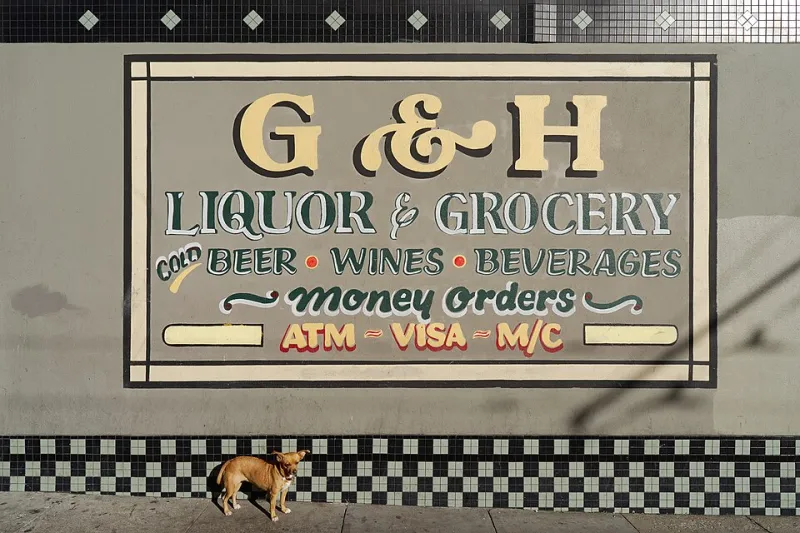
Photo: Nicolas Lannuzel from Singapore, Singapore, CC BY-SA 2.0, via Wikimedia Commons
You are standing in the cereal aisle. Somewhere between the store-brand oat rings and the artisanal granola, a folded square of lined paper has been wedged into the shelf edge, and somebody has written the word FIBER in furious all caps. There is no name. There is no phone number. There is just a list, half-checked, and a story that starts mid-sentence.
Most people step past it. A certain kind of person takes a photo.
That instinct — the one that says a stranger's grocery list is worth preserving, sharing, and dissecting with several hundred people who will never meet the author — has quietly become one of the internet's gentler pastimes. Scattered across photo accounts, forum threads, and the kind of hashtags that never trend but never die, there is a whole genre built on scraps of paper recovered from carts, parking lots, and the little ledge by the self-checkout.
The Scrap That Launched a Thousand Theories
The format is almost aggressively simple. Someone posts a photo of a handwritten list. The list is never interesting on its own. That is the entire point.
Eggs. Batteries. Birthday card. Lettuce (?) — ask Mom.
And then the comments arrive, one at a time, like neighbors leaning over a fence.
Why the question mark next to lettuce? Is the birthday card for a coworker or a niece? Whose mom is being consulted, and does she have strong feelings about romaine? Somewhere in the thread, a person will declare with total confidence that the author is a dad of three who shops on Saturdays, because of the handwriting and the fact that someone wrote 'GOOD bread' with a line under it.
The reconstruction is never verified. Nobody wants it to be. The pleasure is in the speculation — in treating a nine-word list the way a certain kind of viewer treats a true-crime documentary, minus the grimness and with considerably more produce.
What Your Handwriting Is Apparently Saying About You
The armchair analysis is where things get genuinely funny. Every list gets read like a personality test.
Circled items mean anxiety, according to people who have awarded themselves a degree in this. Items crossed out and rewritten mean indecision. A list organized by aisle is the work of a serial planner. A list that begins with 'wine' and ends with 'wine' is the work of someone having a specific week.
One recurring favorite is the mysterious extra item — the thing that does not belong in a grocery store at all. Batteries. Printer ink. A single lightbulb. A card for a wedding the author has clearly forgotten to buy a gift for. These outliers are treated as clues, and the comment section happily builds an entire life around them.
There is a term for this among the people who post them, and it is not a serious one. They call it grocery archaeology. The finds are rarely valuable. The dig is the fun part.
The Comment Section Is the Point
Here is the thing that separates this from the average internet hobby: the comment sections are almost unnervingly nice.
No one is trying to identify the author. When a list includes something faintly personal — a prescription pickup, a name scrawled at the top, an address on the back of a receipt — the etiquette kicks in fast. Blur it out. Crop it. Or just don't post it. The community polices this itself, and the correction usually comes from three people at once, politely, before anyone has to ask.
The tone is closer to a small-town diner than a comment section. People guess at the author's week and hope it went well. A list containing cake mix and candles and nothing else draws a wave of people saying, quietly, that they hope the birthday was a good one. A list with four kinds of frozen pizza draws solidarity instead of judgment. It is a strange and specific kind of tenderness, aimed at someone who will never read it.
The Ethics of Reading Over a Shoulder
It is worth pausing here, because the premise is a little odd when you say it out loud: we are photographing private notes and publishing them for strangers.
The community's answer is that the note was, functionally, abandoned. Left in a cart in a Kroger parking lot, it belongs to nobody. But the answer is not airtight. Shopping lists are fingerprints made of paper. They reveal dietary needs, medical errands, family sizes, financial constraints, and occasionally the exact week a person was having the worst time of their year.
That is why the good-faith accounts follow a short unwritten code: no names, no addresses, no medical details, no screenshots of anything that includes a phone number. The goal is the shape of a life, not the identity of one.
It is also why the best of these posts resist the urge to be mean. A list that reads 'ice cream, ice cream, ice cream, salad' is not a punchline. It is Tuesday.
Why a Napkin Can Hold Your Attention Longer Than a Netflix Premiere
There is a decent explanation for the appeal, and it has nothing to do with the lists themselves.
Algorithms reward the enormous. Big feelings, big fights, big reveals. Abandoned lists are the opposite — microscopic, low-stakes, unsolvable. They function as a palate cleanser, a five-minute scroll that asks nothing of you and hands you a tiny puzzle in return.
They also hit the exact sweet spot that makes a story stick: enough detail to build a picture, not enough to finish it. Your brain fills in the rest. The author of that list has a kitchen, a person they are buying a card for, and a mild grudge against romaine. That is all you get. That is apparently all you need.
The Rules of the Game
If you find one, and you probably will — cart corrals are where paper goes to retire — there are a few practical notes from the veterans. Flatten it. Photograph it in decent light. Crop out anything identifying. Post it where people will get the joke, and caption it with the details that matter and nothing that doesn't.
Then let the comment section do what it does.
Someone will explain that FIBER in all caps is the handwriting of a man in his sixties with a doctor's appointment on Thursday. Someone else will argue it is a woman who has simply had it with her digestion. Nobody will be right. Nobody will be wrong. And the little scrap of paper, which was headed for a parking lot drain, gets one more life as a story told by strangers who are, in the most temporary and harmless way possible, rooting for whoever wrote it.
That is the whole appeal. Not the mystery. The fact that the internet, given a piece of trash and a chance to be cruel, mostly just hopes the birthday went well.